The Coach Who Came to the Door: Jhulan Goswami, Swapan Sadhu and What a Visit to Chakdaha Changed
Jhulan Goswami's family in Chakdaha, West Bengal, was not sure what kind of career their daughter could have in women's cricket in the 1990s. She travelled 62 kilometres by train to Kolkata for practice. When her father Nishit Goswami had money for the fare, she went. When he did not, she missed training. Coach Swapan Sadhu came to the family home and explained what he saw. The parents agreed. Jhulan Goswami went on to take 255 wickets in 204 ODIs, the most in Women's ODI cricket history.
Chakdaha is a town in Nadia district, West Bengal. Kolkata is 62 kilometres away by train.
Jhulan Goswami made that journey regularly as a teenager to train at Vivekananda Park in Kolkata, where Swapan Sadhu ran girls’ cricket coaching. When her father Nishit Goswami had money for the train fare, she went. When he did not, she missed practice.
This is the specific financial reality of a middle-class family in a small West Bengal town in the 1990s trying to understand whether cricket was the right place for their daughter to put her time and energy. The question was not whether they could afford for her to be a cricketer at the level she was aiming for. The question was whether there was a career in women’s cricket at all.
They were not sure. And in the 1990s, when Indian women’s cricket had almost no infrastructure, almost no public visibility and almost no professional pathway, their uncertainty was reasonable.
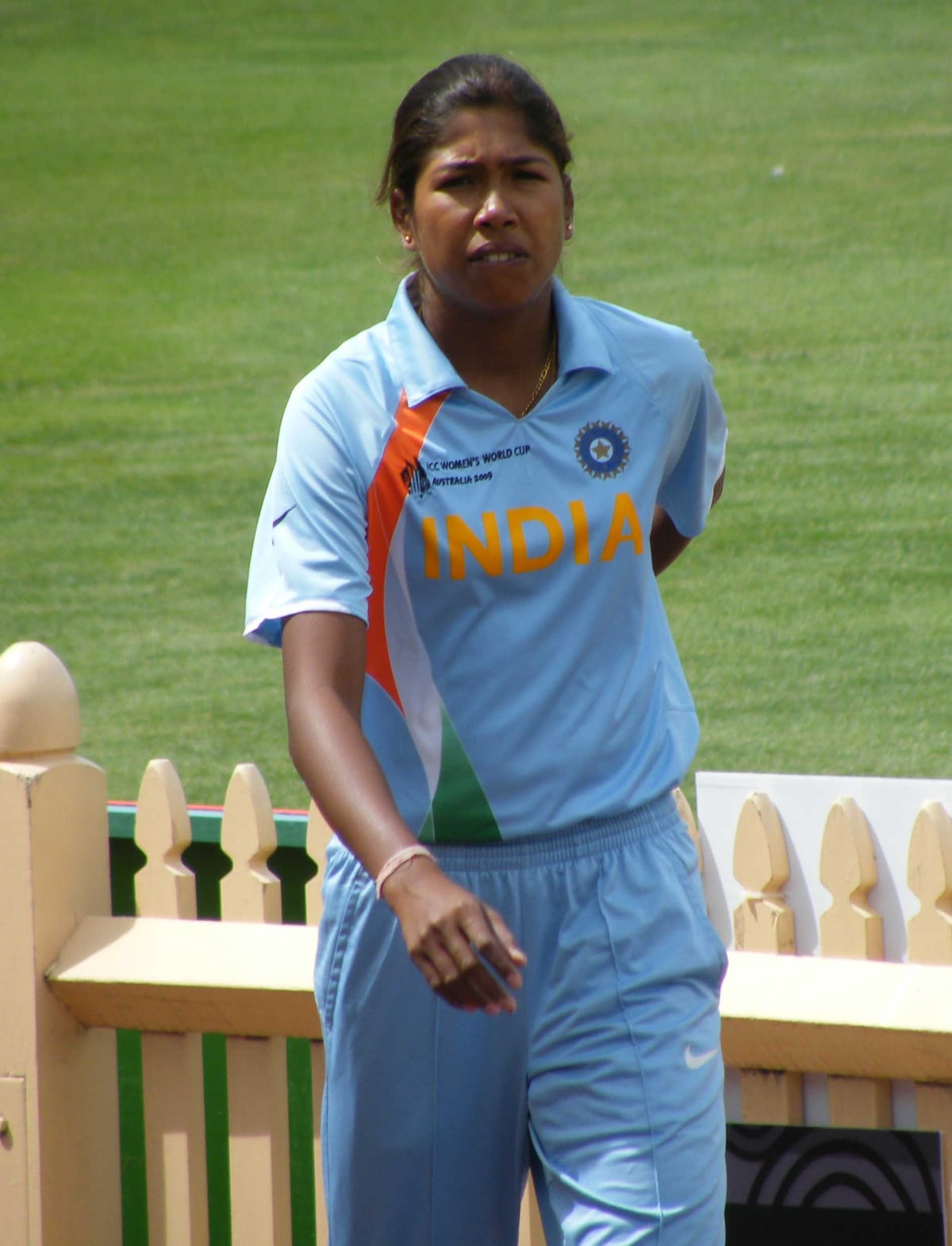
The Family and the Town
Nishit Goswami ran a small business in Chakdaha. Jharna Goswami was a homemaker. They raised Jhulan and her siblings in a two-room house with a tin roof. The family’s circumstances were not exceptional by the standards of middle-class small-town West Bengal, and neither were the community’s expectations for daughters.
In Chakdaha, as in most Indian towns of that era, daughters of middle-class families were expected to pursue classical arts: dance, music, vocal performance. These were considered appropriate pursuits: structured, culturally legible, socially approved. They were also pursuits that did not require your daughter to spend money on daily train fares to a city 62 kilometres away to run in and hit things.
Cricket was not in this category. Cricket was a men’s sport, and women’s cricket was an activity that most families did not know had a professional dimension at all, because professionally it barely did.
Jhulan Goswami had fallen in love with cricket as a child. She played in the streets, she watched every match she could and she found her way to the knowledge that coaching existed in Kolkata. She wanted to train. Her family was prepared to support her, within the limits of what they could afford and within the limits of what they understood about the sport’s future for a girl.
What they could not afford was infinite train fares. What they did not understand was whether the endpoint of all this travel and practice was a real career or an extended exercise in unrealistic ambition.
Jhulan has said it directly: “My family too wasn’t sure what kind of a career I could have in women’s cricket.”
What the Travel Cost
The 62-kilometre train journey from Chakdaha to Kolkata was not symbolic. It was a specific logistics and financial commitment that the family navigated every training day. Nishit Goswami gave his daughter a daily allowance for the fare. There were days when he could not. On those days, she did not go.
This detail tells you something about the specific texture of how families in this situation support a child’s sport without being fully convinced: they fund it within what is available, they do not forbid it and they do not fully commit to it either. They are in a state of sustained uncertainty, hedging between support and doubt, giving enough to keep the door open without giving enough to indicate that the question is settled.
The question was not settled. The question was whether women’s cricket in India was a real career for a girl from Chakdaha. No one in the family had the expertise to answer that question. Nishit and Jharna Goswami were not coaches, not sports administrators and not connected to anyone who could tell them whether their daughter’s talent was exceptional enough to produce a livelihood.
They needed someone from inside the sport to make that case. And they waited, over years, for someone to make it.
Swapan Sadhu’s Decision
Swapan Sadhu coached girls’ cricket at Vivekananda Park. He had watched Jhulan Goswami train. He understood what her ability level was and what she could become with consistent preparation. He also understood, from years of coaching girls from families in this situation, what the obstacle was.
The obstacle was not the girl. The obstacle was the family’s uncertainty about whether the investment was rational.
At some point, Sadhu decided to address that uncertainty directly. He went to the Goswami house in Chakdaha. He introduced himself, sat with Nishit and Jharna and explained what he saw in their daughter and what the pathway forward looked like. He told them what women’s cricket in India was and what it could become. He came back more than once. This was not a single visit. The sources document that he came to the home “often to reassure them.”
Jhulan Goswami described it years later: “One day he came to my house, talked to my parents and explained everything. And then my parents agreed.”
The parents agreed.
What Changed After the Agreement
After the agreement, the dynamic in the family shifted. It did not become simple: the financial constraint was real and did not disappear. But the question of whether the sport was legitimate, whether the investment of time and money was rational and whether the endpoint was a real career now had an answer from a professional source. The family’s position moved from uncertain to conditionally committed.
Nishit Goswami continued giving Jhulan the daily train fare. He did it with a different understanding of what the money was for.
Jhulan Goswami continued making the 62-kilometre journey. She did it knowing her family now understood what she was building.
She trained, competed and progressed through the state and national structures. When she made her debut for India in January 2002, she was nineteen years old. She had been making that train journey for several years.
What the Career Became
Jhulan Goswami: From Chakdaha to 255 Wickets
A single coach's word to a family in Chakdaha in the late 1990s preceded 255 international wickets.
Jhulan Goswami played international cricket for twenty years. She represented India in 204 ODI matches. She took 255 wickets in those matches. That is more Women’s ODI wickets than any bowler, male or female, in the history of the format.
She is the only Indian woman to win the ICC Player of the Year award (2007). She played until September 2022, retiring at Lord’s in what became one of the most documented farewell moments in Indian women’s cricket.
Her mother Jharna, at Jhulan’s retirement, expressed pride in what her daughter had built and hope that she would become a coach. The mother who had not known what career was available in women’s cricket watched her daughter retire at Lord’s having taken more wickets in the format than anyone in history.
Jhulan Goswami’s career, end to end, is the answer to the question Nishit and Jharna Goswami were asking in the 1990s: is there a career in women’s cricket for a girl from Chakdaha?
The answer is 204 matches, 255 wickets, a Lord’s farewell and the highest wicket tally in the history of Women’s ODI cricket.
What Coach Sadhu’s Visit Represents
The specific mechanism in this story is not what most families in this situation think it is.
The mechanism was not Jhulan convincing her parents. She could not have convincingly made the case that Swapan Sadhu made, because she did not have his professional context. She could tell her family she loved cricket and wanted to pursue it. She could not tell them, with the authority of someone who had spent years coaching girls in this sport, what the professional pathway looked like and what her specific talent was worth.
The mechanism was also not the family eventually coming around on their own. The information available to them was a sport with almost no public professional infrastructure for women, a coach they had not met and a daughter who wanted to travel 62 kilometres for training. With that information alone, they would have remained in uncertainty indefinitely.
The mechanism was a professional entering the family home and making the case that no one inside the family could make. Swapan Sadhu knew what Jhulan’s ability level meant in the context of women’s cricket. He knew what the pathway looked like. He came to Chakdaha and said so.
This is the intervention most families in this situation do not know they can request, and most coaches do not know they are obligated to offer.
The coach’s visit is not an extraordinary act of generosity. It is what coaches who understand their role in an athlete’s development actually do: they do not wait for families to arrive at certainty through information they do not have. They go to the families and provide the information.
What to Do This Week
If you are a family with a daughter in a sport and you are uncertain whether the sport has a real professional future: do not try to answer that question from general knowledge or from what you see on television. Contact the state sports association for the specific sport and ask specifically what the pathway looks like for a player at your daughter's current level. This is what Swapan Sadhu gave the Goswami family. It was not a promise of a career. It was an informed professional assessment of what the pathway contained and what her ability suggested about her position in it.
If you are a young athlete whose family is in sustained uncertainty about your sport: the conversation you need is not a conversation you should be having alone. Identify the coach, the official or the sports professional who has the standing to speak to your family from a position of expertise. This is the conversation Swapan Sadhu had in Chakdaha. Your family's uncertainty is reasonable given the information they have. The information they are missing is professional information that a professional has to provide.
Look up the current structure of women's cricket in India: the BCCI Women's contracts, the WPL (Women's Premier League), the state association pipelines, the Air India and other institutional employment pathways that have existed for women cricketers. In the 1990s, when Jhulan Goswami was beginning, none of this existed. The professional infrastructure has changed substantially. If the question in your family is whether there is a career in women's cricket, the answer today is not the same as the answer was when the Goswami family was asking it. Verify current information before drawing conclusions from the past.