The Father Who Made the Call: Dorai Raj, Mithali Raj and the Decision That Built a 23-Year Career
Mithali Raj trained in Bharatanatyam for eight years and loved it. Her father Dorai Raj, a warrant officer in the Indian Air Force, brought her to her brother's cricket coaching sessions at 6am to install discipline, not because he had a plan for her to be a cricketer. A coach named Sampath saw her bat, told her father he would make her play for India by 14 and asked for blind support. The father was not convinced. He also did not stop. Mithali Raj played international cricket for 23 years.
Mithali Raj was not initially a cricketer. She was a dancer.
She trained in Bharatanatyam for eight years. She performed on stage. This was not a casual interest she had in passing. It was eight years of sustained classical dance training, the kind that requires the same early mornings and deliberate practice that sport does. She was good at it and she loved it.
What changed was her father.
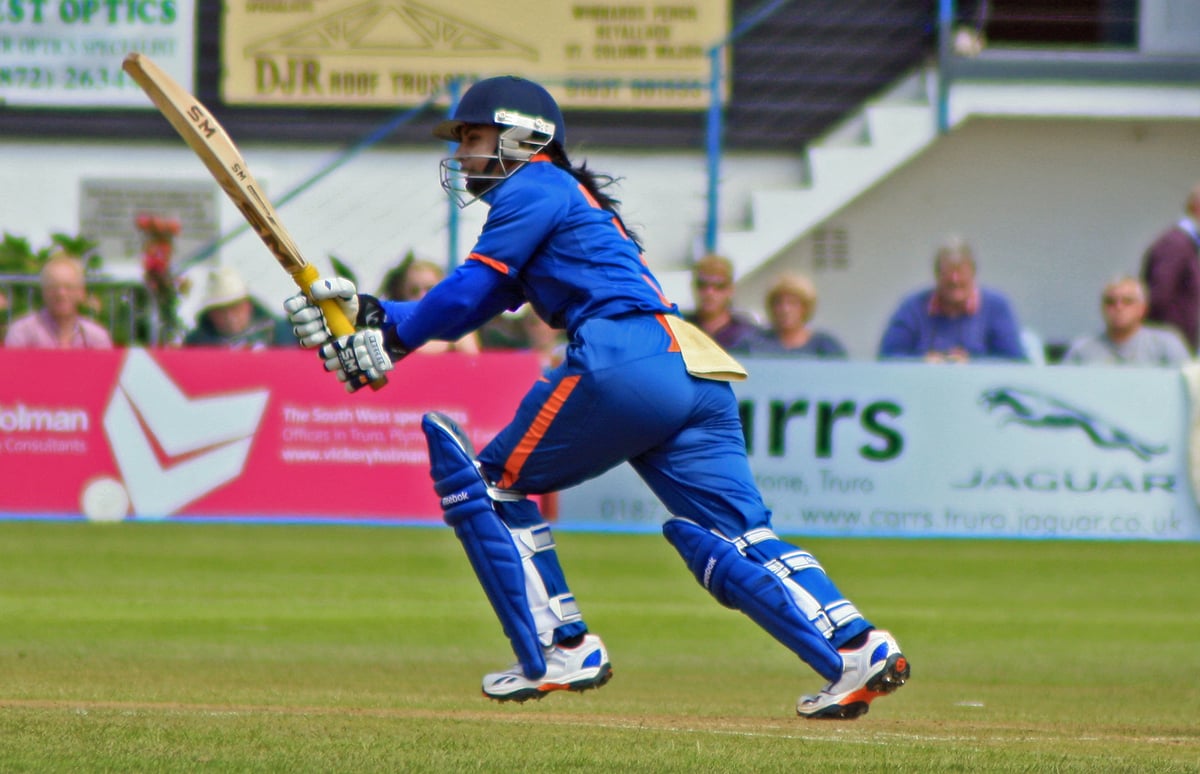
What Dorai Raj Did and Why
Dorai Raj was a warrant officer in the Indian Air Force. His son, Mithun, was attending early morning cricket coaching sessions at St John’s Academy in Secunderabad. Mithali was what her mother later described as a very lazy child who always enjoyed her sleep.
Dorai Raj’s solution to the sleeping problem was specific: he took Mithali with him to her brother’s 6am cricket sessions. This was not a cricket decision at the start. It was a discipline decision. He wanted her to be up early and structured. Cricket practice was the mechanism. She was barely ten years old.
This is how many things that look like a deliberate choice from the outside start on the inside: a practical intervention for one problem producing an entirely different result. Dorai Raj was trying to install a morning routine. What he accidentally installed was a cricketer.
What the Coach Saw
At the St John’s Academy sessions, someone noticed Mithali batting. Her coach, Sampath, watched her and made a specific assessment. He went to Dorai Raj with a specific proposition.
The proposition was this: “I want the complete trust of you and your wife. I want blind support. I will make Mithali play for the country by the time she’s 14.”
Dorai Raj was not convinced.
This is worth pausing on. A coach had just told him his daughter had the talent to represent India within four years. The father’s response was not immediate enthusiasm. He was skeptical. He was a parent being told something dramatic about a child who had come to cricket as a side effect of a discipline intervention, not a child who had lobbied for a cricket career. His skepticism was the appropriate response of someone who had not yet seen the evidence.
What Sampath was asking for was not proof of what he saw. He was asking for trust in advance of proof. He was describing a future that had not yet happened and asking the family to organise around it. Dorai Raj heard this and remained unconvinced but did not withdraw.
The Eight Years of Dance
Mithali continued in Bharatanatyam alongside cricket for several years. This matters because the choice she eventually made was not the choice of someone who had nothing invested in dance. She had given eight years to a classical discipline that has its own rigorous demands. She had performed on stage. She had a life in dance as well as in cricket.
At some point, the demands of serious cricket and serious dance became incompatible. Around Class 8, she had to choose.
She chose cricket. Or, more precisely, cricket chose her, with her father’s instrumental role in placing her where the choosing became possible.
In an interview years later, Mithali was specific about this: “I love dancing but dad wanted me to be a cricketer.”
This is not the statement of someone who was forced into a sport she resented. It is the statement of someone who understood that a parent made a call before she was old enough to make it herself, and that the call turned out to be right. The dance was real. The preference was real. The father’s decision was also real. And what the father’s decision produced was a 23-year cricket career that she built because she was, at the end, as committed to cricket as she had been to dance.
What Happened When She Was Fourteen
Sampath had promised to make Mithali play for India by the time she was fourteen. He did not exactly keep that promise. She was sixteen when she made her ODI debut for India against Ireland in 1999 at Milton Keynes.
The distinction matters not because Sampath was wrong but because it illustrates the imprecision that coaches sometimes use when talking to parents about timeline. The commitment was real. The specific number of years was an estimate. What Sampath saw in Mithali when she was barely ten was the talent and the trainability. That assessment held. The exact timing shifted.
Dorai Raj had not been convinced by the promise. What convinced him, over time, was what his daughter was producing, not what a coach predicted she would produce.
What the Career Produced
Mithali Raj: A Father's Decision, A Career That Followed
Dorai Raj's decision was not a guess. It was based on watching his daughter at both disciplines for five years.
Mithali Raj played international cricket from 1999 to 2022. Twenty-three years.
She is the leading run-scorer in the history of women’s international cricket. She captained the Indian women’s team across multiple formats and across multiple decades, leading India to the final of the ICC Women’s Cricket World Cup in 2005 and again in 2017.
She was 39 years old when she retired. She had been playing international cricket since she was 16.
The man who took a sleepy child to her brother’s 6am cricket practice to install some discipline watched his daughter play for India for 23 years.
Coach Sampath’s prediction had been roughly accurate. The father’s skepticism had been reasonable. The path between them (a child who loved dance, a father who made a practical decision for non-cricketing reasons, a coach who saw something specific) produced one of the longest and most decorated careers in the history of Indian women’s sport.
What This Family’s Story Is For
The Mithali Raj story is usually told as a discovery narrative: talent found at a young age, developed, career produced. The family dimension of it is less often examined.
What the family story contains is a specific kind of parent decision: a father who placed his daughter in an environment not because he had a vision of her future in sport but because he had a practical concern about a present behaviour. The sport was the mechanism, not the goal.
The result of that decision is that Mithali Raj became a cricketer when she might have remained primarily a dancer. The result is also that she chose to stay a cricketer when the choice between dance and cricket was placed before her, which tells you that the sport had become genuinely hers by the time she had to choose.
There are two things in this story that resist the simpler narrative:
First, her father’s decision to keep bringing her to cricket despite his own skepticism about the coach’s promise shows that parents sometimes keep their children in environments that will eventually define them without fully believing in the outcome themselves. Dorai Raj was not convinced. He also did not stop. That combination, skepticism without withdrawal, gave the sport time to work.
Second, Mithali’s own account of loving dance but accepting her father’s choice shows that the parent-child dynamic in a sporting career is sometimes not about the parent resisting and the child persuading. Sometimes it is the reverse. Sometimes a parent makes a call that a child comes to understand was right, without the child having lobbied for it.
The conversation that changed everything in this family was not between father and daughter. It was between a coach who saw a future and a father who was not yet convinced, with a child who had arrived at cricket by accident and stayed because what she found there was worth staying for.
What to Do This Week
If you are a parent who placed your child in a sport for reasons that were not specifically about that sport (discipline, health, company with a sibling, a structured schedule) and that child has responded to the sport seriously: reassess whether the original motivation is still the most relevant frame. The thing that got the child into the sport is not necessarily what keeps the child in the sport. Mithali came to cricket for her father's reasons. She stayed for her own.
If you are a young athlete who has had to make a choice between two serious pursuits: Mithali Raj's account of giving up dance she loved is documented and specific. The loss of one serious pursuit to make space for another is a real cost, and it is worth naming it as such. The cricket career does not make the dance years irrelevant. They built the same kinds of things sport builds: discipline, performance under observation, physical attention. She took those things into cricket.
If you are a parent whose child has shown early talent and a coach has made a claim about future potential: Dorai Raj's response is instructive. He was not convinced. He also did not withdraw. He gave the environment time to produce evidence. If a coach's assessment is credible, if the coach has the expertise and track record to make the claim, the response is not to immediately believe the promise. It is to not close the door while the evidence is still accumulating.