Sport Didn't Make Me a Professional Athlete; It Made Me Everything Else
Hardy Sandhu trained alongside Virat Kohli and Rohit Sharma at India U-19 level. An elbow injury ended his cricket. He drove a taxi in Australia and became one of Punjab's biggest music stars. Agnishwar Jayaprakash won six South Asian Games gold medals at 17. He built a drone company that nearly went bankrupt in 2020 and reached $250 million in valuation in 2023. Both stories are about what sport builds that no sport career can take away.
When a sporting career ends, the question that follows is rarely the one families spent years dreading.
The question they dreaded was: what if sport leads nowhere? What they discovered, in case after case, is that sport leads somewhere. Just not always where anyone planned.
The two athletes in this account played at national level. One represented India Under-19 alongside the players who would become Indian cricket’s core for the next fifteen years. One set national records in swimming and won six gold medals at a regional championship at seventeen. Neither of them became a professional athlete in the sport they had trained for.
What they became was more interesting.
Hardy Sandhu: From India U-19 to Driving a Taxi in Australia to Soch
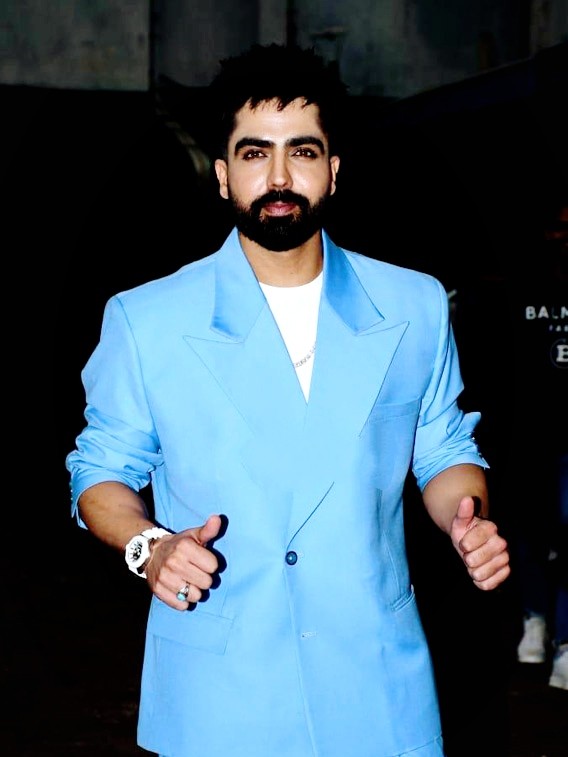
Hardavinder Singh Sandhu was born in Patiala in 1986 and played cricket from a young age in Punjab. He was a fast bowler: quick, aggressive, the kind of bowler that under-19 selectors notice.
He represented India Under-19 at the national level. His training camps brought him alongside players whose names would later become household: Virat Kohli, Shikhar Dhawan, Rohit Sharma, Ravindra Jadeja. He was in that company on merit, competing at the same level, selected through the same process.
In 2006, an elbow injury interrupted his career. He went to Australia to seek treatment. The rehabilitation did not go as expected, and while he was in Australia, not playing cricket and uncertain about when or whether he would again, he drove a taxi.
He has described what happened in that taxi: he sang. He had always sung privately, the way athletes often have one thing they do when no one is watching. In Australia, with the cricket career stalled and the situation uncertain, the singing became something he noticed himself doing with genuine commitment rather than casual habit.
He came back to India. The injury recurred. The cricket career did not resume.
He took up formal vocal training instead.
In 2013, his debut track “Soch,” written by Jaani and composed by B Praak, became a significant hit across Punjabi music. The song established him in an industry where credibility is built slowly, and it established him immediately. The tracks that followed, including “Joker,” “Naah,” “Backbone” and “Bijlee Bijlee,” each extended his reach and his reputation as an artist who understood both emotion and production.
In 2021, he made his Hindi film debut in Kabir Khan’s 83, the film about India’s 1983 World Cup win. He played Balwinder Singh Sandhu, a fast bowler from Punjab.
The sport he had trained in since childhood, the career the injury ended, became the research he brought to one of his most visible performances. Cricket did not make him a professional cricketer. It gave him the physical bearing, the competitive psychology and eventually the biographical material for the work that came after.
Agnishwar Jayaprakash: From South Asian Games Gold to a Drone Company Worth $250 Million
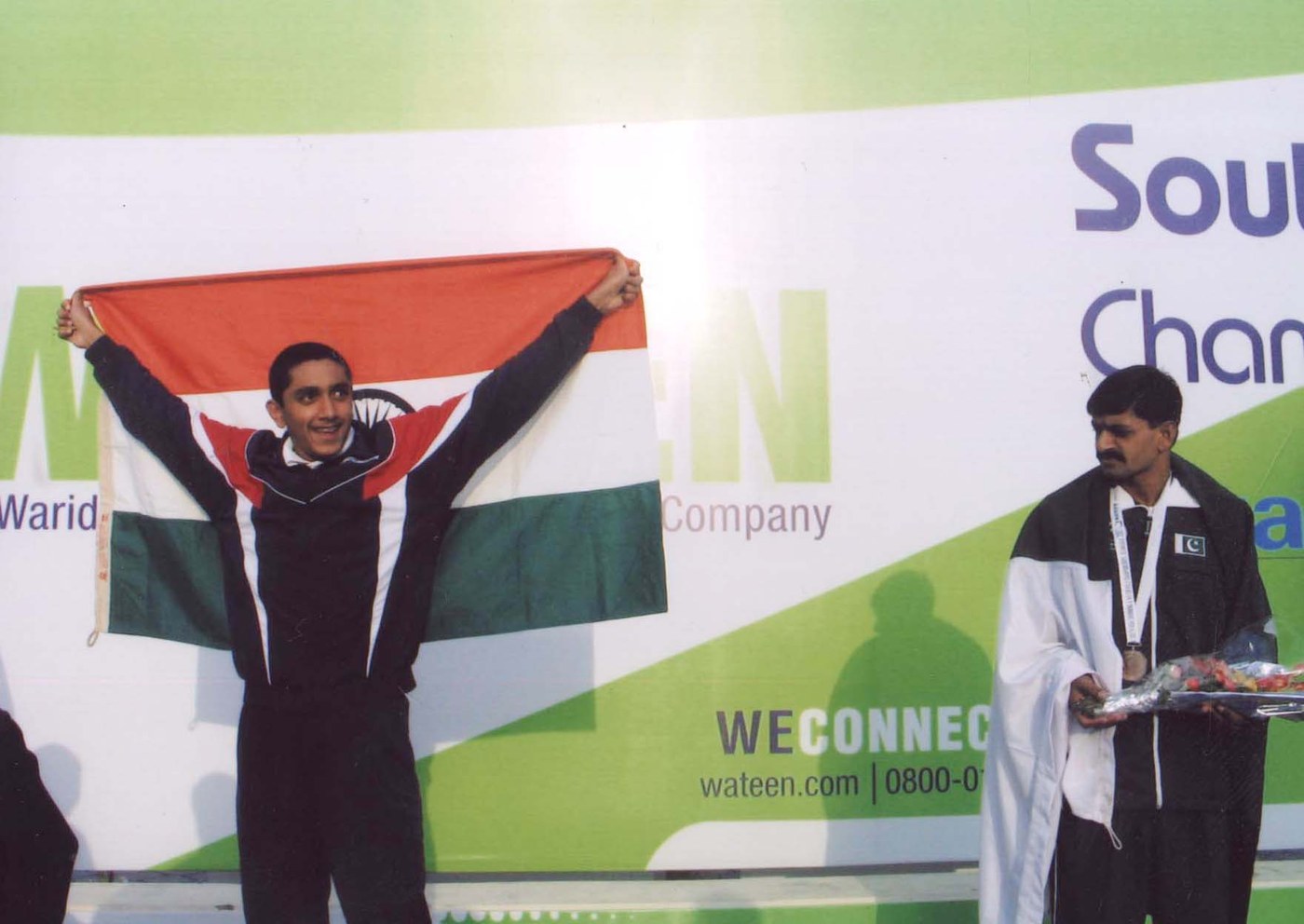
Agnishwar Jayaprakash was born in Chennai in 1990. He started swimming at age three, not for competitive reasons initially but because his parents were advised it would help a respiratory condition. He took to it with unusual speed.
By 2004, at fourteen years old, he had qualified to compete at the FINA World Swimming Championships in Indianapolis. He was one of the youngest Indian swimmers ever to compete at that event.
In 2007, at the South Asian Games, he won six gold medals and set multiple national records. He was seventeen.
He went on to complete a Bachelor of Engineering in Mechanical Engineering at Anna University and a Bachelor of Business Law at Annamalai University. He graduated in 2013. By then, the swimming career had run its course at the elite level, and he had begun looking at what came next.
What came next was an attempt to build something.
He founded AEDX in 2013, focused on educational travel and experiential learning. He founded Agni Foundation in 2014, a non-profit focused on education and healthcare access. These were early ventures, the kind that form the first layer of a founder’s learning regardless of whether they scale.
The venture that would define his next decade was Garuda Aerospace, a drone technology company. The logic behind it was specific: India had emerging drone applications across agriculture, surveillance, logistics and public services, and the domestic manufacturing capability to meet that demand was limited.
In 2020, Garuda Aerospace was close to shutting down. The company was under financial pressure and the runway was almost gone.
What changed the trajectory was a decision to use the technology differently. During the COVID-19 pandemic, Garuda deployed its drones to sanitize government buildings. The visibility that came from that application, demonstrable utility in a high-stakes public context, changed how institutions and investors looked at the company.
In 2022, MS Dhoni invested in Garuda Aerospace and became its brand ambassador. By 2023, the company was valued at approximately $250 million.
Agnishwar has spoken about how the qualities built in years of serious competitive swimming: the capacity to train consistently without visible short-term reward, to manage physical and psychological pressure in competition and to recover from poor performance without losing direction. These qualities transferred to the work of building a company that nearly failed before it succeeded.
The South Asian Games gold medals did not turn into an Olympic programme. They turned into the character of a founder who did not shut down when the company was nearly bankrupt.
What These Two Stories Have in Common
Two Athletes. Two Completely Different Second Acts.
Both used what sport built (discipline, performance under pressure, public identity) in an entirely different arena.
Neither of these careers followed the plan.
Hardy Sandhu’s cricket career ended with an elbow injury in Australia at twenty. Agnishwar Jayaprakash’s swimming career ended when he transitioned to building companies in his early twenties. Neither man’s story fits the narrative of sport as a direct career path.
What sport gave them was not a profession. It was a foundation. The discipline of training daily for a sport that requires years before results are visible. The experience of performing under pressure in environments where the outcome is real and public. The habit of doing the necessary work even when motivation is not present, because the match or the race or the selection trial is coming regardless.
These things do not stay inside the sport. They come with the person.
Hardy Sandhu’s music career was built with the same commitment he brought to fast bowling. Agnishwar Jayaprakash’s company was kept alive in 2020 with the same refusal to accept a losing position that competitive swimming builds over years.
The parents who ask whether sport was worth it are asking the wrong question. The right question is: what kind of person does this sport build, and what can that person do in any environment they enter afterward?
The answer, in both of these documented cases, is a great deal.
What to Do This Week
If you are an athlete approaching the end of your competitive years or managing an injury that may end them sooner than planned: write down three specific qualities that serious training built in you that have nothing to do with your sport specifically. Discipline, recovery, competition management, team accountability. Make the list concrete. These are transferable assets, and naming them precisely is the first step to using them.
Hardy Sandhu's story from cricket to music ran through a period of uncertainty (including driving a taxi in Australia) before it resolved. If you are in that uncertain period, the question is not whether the sport background was useful. It is what form the next commitment will take. The commitment itself, not the field, is what sport trains.
Look up Garuda Aerospace and read specifically about the 2020 period when the company nearly closed. Agnishwar has been public about what that period was like and how he held it together. His account is a detailed illustration of what athletic psychology looks like inside a business crisis. Read it before drawing conclusions about what sport builds.