They Didn't Give Up Sport for a Job; the Job Came Because of the Sport
Neeraj Chopra became an Army Naib Subedar at 18, before he had competed at a senior World Championship. Deepak Punia and Amit Panghal both joined the Army through sports quota as JCOs. Bajrang Punia and Vinesh Phogat both held Railway jobs while competing at Olympic level. The route starts at junior national, not at the Olympic podium.
There is a specific fear that runs through Indian households when a child is training seriously. It is not usually about injury or failure. It is about employment.
The fear sounds like this: sport is fine while you are young, but what happens when the sport is over?
The answer, for a specific and well-documented group of Indian athletes, is that the sport was never separate from the livelihood. The Army and the Railways have been recruiting athletes through sports quota for decades. The names that came through this route in the last ten years include some of the most accomplished Indian sportspeople alive.
What most families do not know is that this route starts at junior national level, not at the Olympic podium.
How the Indian Army Recruits Athletes
The Indian Army offers direct recruitment to sportspersons at the Junior Commissioned Officer (JCO) level. The position is Naib Subedar. The minimum requirement is a medal at a junior or senior national championship, or representation of India at the international level in a recognized sport.
This is a full Army position, not an honorary title or ceremonial role. It comes with salary, allowances, accommodation, medical coverage and pension. The athlete continues training under Army infrastructure and represents the Army at competitions. The sport career does not pause. It continues, funded and supported, within the institution.
Three athletes whose names are now known across India came through this route.
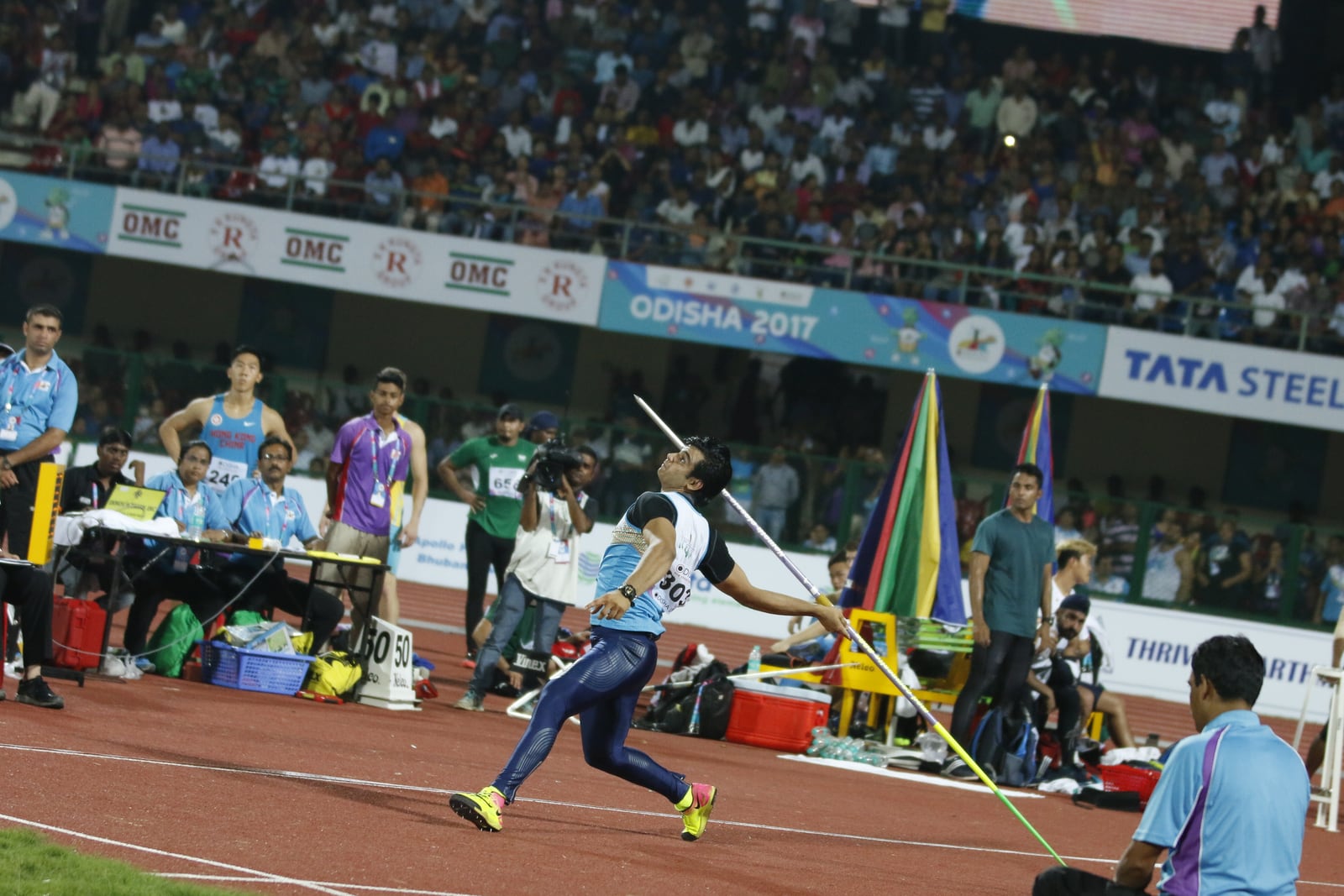
Neeraj Chopra: Naib Subedar Before the Senior World Championships
Neeraj Chopra was born in Panipat, Haryana in 1997. He took up javelin at 13 after a coach suggested it as a way to manage his weight.
He became the under-16 national champion in javelin in 2012. In July 2016, at 18 years old, he won gold at the IAAF World Under-20 Championships in Bydgoszcz, Poland with a throw of 86.48 metres, a new world junior record.
In August 2016, the Indian Army appointed him Naib Subedar in The Rajputana Rifles. He was 18. He had not yet competed at a senior World Championship. He had not yet won an Asian Games or Commonwealth Games medal.
The Army appointment came on the back of a junior world record.
He was promoted to Subedar in 2018 after winning gold at both the Commonwealth Games and the Asian Games in the same year. He won Olympic gold at Tokyo in 2021. Promotion to Subedar Major came in 2022. In October 2025, he was conferred the honorary rank of Lieutenant Colonel.
The man who is now the only Indian field athlete to have won Olympic gold held an Army rank before he had competed at a senior World Championship. The job came because of a junior world record, not because of Olympic fame.
Deepak Punia: World Junior Champion, Then Naib Subedar
Deepak Punia was born in Jhajjar, Haryana in 2000. He grew up in a district with wrestling embedded in its culture and began competing at the district and state level through the structures available in Haryana.
He won gold at the World Cadet Wrestling Championships in 2016 at 85 kg, India’s first title in that category in over a decade. In 2018, he won gold at the Asian Junior Wrestling Championships at 86 kg. In 2019, he won gold at the World Junior Wrestling Championships at 86 kg, the first Indian wrestler to do so in 18 years. United World Wrestling named him Junior Freestyle Wrestler of the Year.
The Indian Army appointed him Naib Subedar in 2018, after his Asian Junior gold and before he had won a senior World Championship medal.
He went on to win silver at the 2019 Senior World Wrestling Championships and gold at the 2022 Commonwealth Games in Birmingham.
The appointment came from his junior record. The senior achievements followed.
Amit Panghal: Sub-Junior National to Naib Subedar
Amit Panghal was born in Mayna village in Rohtak, Haryana in 1995. His elder brother Ajay was a former boxer and introduced him to the sport at Sir Chhoturam Boxing Academy in 2007.
In the first year he competed, he won gold at the Sub-Junior National Boxing Championship.
By 2017, he had won the National Boxing Championship gold on his debut appearance at the senior level. In March 2018, the Indian Army appointed him Naib Subedar in the 22nd Battalion of the Mahar Regiment.
What followed within twelve months: gold at the 2018 Asian Games in Jakarta (defeating the Uzbek Olympic champion Hasanboy Dusmatov), bronze at the 2018 Commonwealth Games, promotion to Subedar in 2019 and silver at the 2019 AIBA World Boxing Championships, the first Indian boxer to reach a World Championship final.
The Army appointment came before any of that. It came in 2018, on the basis of his national championship record.
The Haryana Pattern
It is worth pausing here. All three of these athletes (Neeraj Chopra, Deepak Punia, Amit Panghal) are from Haryana. All three joined the Army as Naib Subedar between 2016 and 2018. All three went on to become internationally accomplished.
This is not coincidence. Haryana produces more national-level athletes per capita than any other Indian state, and it has built, over decades, a specific cultural understanding of the Army as a career destination for athletes. Young people in Haryana who compete seriously at state and national level are aware that an Army job through sports quota is a real outcome, not a theoretical one. That awareness shapes how they train.
The awareness is the first thing. Once you know the route exists and what it requires, you train differently.
Indian Railways: The Other Large Employer
The Indian Railways is among the largest employers in the world and is also one of the largest employers of athletes in India.
The Railways recruits sportspersons through the Railway Sports Promotion Board, dividing the quota between Talent Scouting (60%) and Open Advertisement (40%). The recognized sports list includes athletics, badminton, boxing, hockey, wrestling, football, shooting and more than twenty other disciplines. The eligibility starts at junior national championship level, not at Olympic or Asian Games performance.
Two of the most prominent wrestlers in the country held Railway positions during their competitive careers.
Bajrang Punia, a four-time World Wrestling Championship medalist and bronze medalist at the 2020 Tokyo Olympics, worked as a Gazetted Officer in the Railways, specifically as Officer on Special Duty (OSD) Sports. He held this position while competing at the highest international level. He resigned in September 2024 when he joined the Indian National Congress ahead of the Haryana state elections.
Vinesh Phogat, the first Indian woman to win gold medals at Asian Games (2014 and 2018) and Commonwealth Games, who reached the wrestling final at the 2024 Paris Olympics, also worked for the Indian Railways. Her husband, wrestler Somvir Rathee, was a Railway employee as well. She resigned when she entered electoral politics in 2024.
Both held Railway positions throughout their years of international competition. The job provided financial stability during a period when elite athletes face unpredictable income, frequent travel and the sustained pressure that is easier to manage when employment is not also uncertain.
What This System Is Designed to Do
Army and Railway Sports Quota: Two Routes, Similar Logic
Indian Army
- Who qualifies: national championship medal or international representation
- Application: local Army Sports Board / unit sports officer
- Job grade: Naib Subedar / Havildar equivalent
- Benefits: salary, continued training, Army Sports Institute Pune access, pension
- Named examples: Neeraj Chopra (javelin), Deepak Punia (wrestling), Amit Panghal (boxing)
Indian Railways
- Who qualifies: 29 approved sports, national/international performance level
- Application: Railway Recruitment Board (RRB) special sports quota notification
- Job grade: Group C (TTE / Loco Pilot / other)
- Benefits: salary, continued sport, national-level railway tournaments
- Named examples: Bajrang Punia, Vinesh Phogat (wrestling), several Olympic athletes across sports
Both systems exist because the Indian state recognised decades ago that elite athletes needed jobs that accommodated training schedules.
The Army and Railways do not recruit athletes as charity or recognition of past achievement. They recruit athletes because they want athletes in their organizations: for institutional competitions, for representation at national level, for the discipline and competitive instinct that serious training produces in any person who undergoes it.
The arrangement works on both sides. The athlete gets a career, income, infrastructure and continuity of training. The institution gets sports teams staffed by people who are genuinely competitive.
The eligibility that matters most for the platform’s audience is this: the Army’s sports quota for Naib Subedar begins at junior or senior national championship medalist level, or international representation for India. The Railways’ recognized sports achievements for recruitment also include junior national championship performance.
You do not need to be Neeraj Chopra to access this route. You need to be a national-level junior athlete in a recognized sport. That is a different and more accessible benchmark than Olympic gold.
What to Do This Week
Go to the Indian Army's recruitment website (joinindianarmy.nic.in) and find the sports quota section. Read the current eligibility criteria for direct entry at Havildar and Naib Subedar level. Look specifically at which sports are recognized and what performance level (junior national, senior national or international representation) qualifies for each rank. Read it as an athlete checking their own eligibility, not as someone reading about it abstractly.
Find the sports quota recruitment notification for your nearest Railway zone. Railway Recruitment Cell websites publish these annually. The 2025-26 notifications are already available for most zones. Read what performance in your sport qualifies for Railway recruitment, at what age and at what level of competition. If you are currently competing at state level, calculate how far you are from the Railway eligibility benchmark and what it would take to reach it within the next two competition seasons.
Identify one athlete in your training environment (at your academy, club or state squad) who has a government job through sports quota in the Army, Railways or any other PSU. Ask them specifically how it happened: what level they were at when they applied, what the process looked like from application to appointment and what the job means practically now alongside continued competition. The account of someone who has actually used this route tells you more than any general information does.