He Faced Every Financial Obstacle to Study at Loughborough and Then Built a Scholarship for the Next Indian Athlete
Aman Dhall played table tennis for Uttar Pradesh, faced significant financial challenges studying Sport Management at Loughborough, built a communications career through his UK network and then created the Virendra Kumar Dhall Scholarship (£12,500 per year for Indian student-athletes at Loughborough) so the next athlete would not face what he did.
In 2024, Aman Dhall committed £62,500 over five years (£12,500 per year) to fund an annual scholarship at Loughborough University for Indian student-athletes. He named it the Virendra Kumar Dhall Scholarship for Sporting Excellence, in memory of his father.
He did not do this because studying at Loughborough had been easy for him.
He did it because it had been hard, and he understood exactly what kind of hard it was.
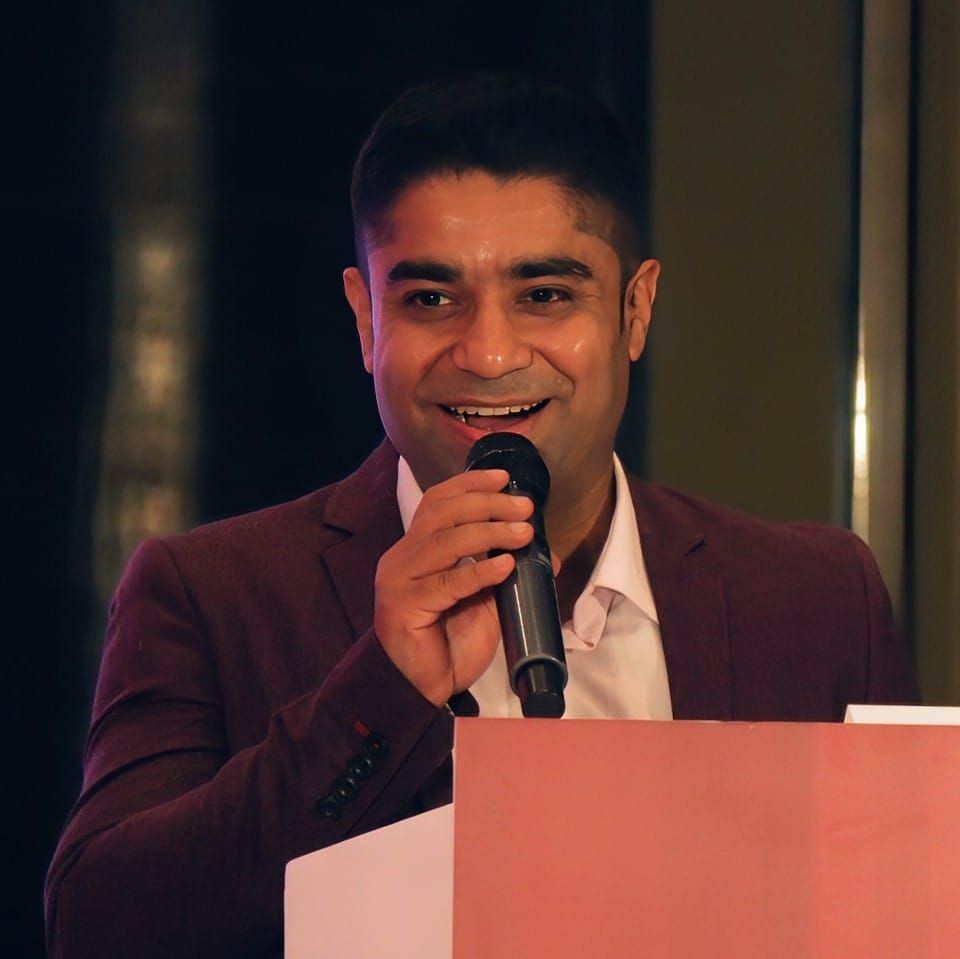
Who Aman Dhall Is
Aman Dhall played table tennis for Uttar Pradesh at junior level. He was a competitive player, not a recreational one, with state-level experience in a sport that requires years of serious training to compete credibly at any organized level.
He wanted to build a career in sport. He had the playing background that gave him a feel for athletic performance from the inside. What he lacked was the professional and business framework that sport management requires on the commercial and organizational side. When he looked at postgraduate options, Loughborough University appeared consistently as the strongest choice in the world for sport-related education.
Loughborough is not a convenient or inexpensive option from India. It is competitive, its fees are substantial and funding for Indian students in postgraduate sport management is limited. Aman applied anyway and was accepted. He completed his MSc in Sport Management in 2010-11.
During his time at Loughborough, he played for the university’s table tennis team and for Leicestershire County, keeping his sport active while completing his degree. The combination of academic study in sport management and active competitive participation gave him access to the kind of network that Loughborough’s position in global sport creates: coaches, performance directors, sports business professionals and organizations working at the intersection of sport and enterprise.
He faced significant financial challenges in the years when he was building his sporting career and then his postgraduate education. The details of how he managed the Loughborough funding are his own, but the fact that he later established a scholarship specifically designed to remove that obstacle for others is the clearest signal of what that period cost him and what he thought about it afterward.
What Loughborough Gave Him
After completing his MSc, Aman built a career in communications. He founded CommsCredible, an integrated communications consultancy. The sport management foundation from Loughborough and the professional relationships built through the university’s network informed the direction of his work.
In 2024, he represented India at the ITTF World Masters Table Tennis Championship in Rome in the 40+ age category, fulfilling his father’s long-held dream of seeing him represent India internationally. The sport he played through his youth and the education he pursued in the UK became, eventually, part of the same story.
He was honoured as India-UK Outstanding Achiever at the House of Lords in London and received the Study UK British Council Alumni Award in 2026. These are not generic honours. They are specific recognitions of what a career built across two countries, with sport as the thread, can look like.
The Scholarship He Created
Aman Dhall: India to Loughborough
BUCS provides the competition structure. Loughborough provides the training environment. Neither requires an NCAA-style fully funded scholarship.
The Virendra Kumar Dhall Scholarship for Sporting Excellence offers £12,500 per year to an Indian student-athlete at Loughborough University.
The criteria are specific: the recipient must be an Indian student competing at international level or on track to represent India, in a non-cricket sport. Athletics, hockey, badminton and similar disciplines are the target. The scholarship is funded for five years, which means five annual recipients.
Aman’s stated reason for establishing it is exactly what this platform would expect: he faced financial and other obstacles that Indian athletes face when pursuing international education, and he wanted to remove those obstacles for the athletes who would come after him. The scholarship is his answer to the question of what you do when a pathway was hard to walk: you make it easier for the next person.
£12,500 does not cover the entire annual cost of studying at Loughborough. Tuition for postgraduate programmes runs higher. But it is a substantial contribution, and it is specifically targeted at the athlete-scholar profile that is otherwise most likely to be deterred by the financial arithmetic.
What This Pathway Looks Like in Practice
For an Indian student-athlete considering Loughborough or any UK university with a serious athletics programme, the financial planning is not optional. It is the work.
The components that need to be assembled: any scholarship or bursary at the institution (the Virendra Kumar Dhall Scholarship is the most specific one available for Indian athletes at Loughborough); an education loan from an Indian bank covering tuition and part of living costs (HDFC Credila, Axis Bank and State Bank of India each offer education loans for UK study, with different terms and collateral requirements); and part-time income during the degree, which UK student visas permit at up to 20 hours per week during term time.
None of these components work if the planning starts after an offer arrives. Loan applications take time. Scholarship deadlines run on their own timelines, often concurrent with or before university application deadlines. The financial plan needs to be built in parallel with the academic application, not after it.
What Loughborough’s Sport Management programme and its equivalent at Bath, Exeter and Birmingham offer is not only an education. It is access to the professional network of global sport, including coaches, performance scientists and sports business professionals, that Indian athletes rarely encounter through domestic routes. Aman Dhall’s career after Loughborough illustrates what that access can produce over time.
What to Do This Week
Look up the Virendra Kumar Dhall Scholarship on the Loughborough University website. The eligibility criteria, application process and timeline are published. If you are an Indian student-athlete in a non-cricket sport with a credible competitive record, read the criteria specifically, not generally. The scholarship exists for a profile that matches many serious Indian athletes.
If UK university study is a genuine consideration, contact one Indian bank that offers education loans for UK study. HDFC Credila is a specialist in this area. Ask specifically about the current terms for your target institution and programme. Do this while you are in the application period, not after an offer arrives. The loan processing timeline is the one that most families underestimate.
Look at British Universities and Colleges Sport (bucs.org.uk) and identify UK universities where your sport is competed at the varsity level. Not every UK university with a good academic programme has strong athletics infrastructure. Building a shortlist that satisfies both criteria simultaneously is the first filtering step.