She Went to Columbia and Came Back: Neha Aggarwal and the Career She Built in India After the Olympics
Neha Aggarwal represented India in table tennis from 2001 to 2014 and competed at the Beijing 2008 Olympics. She retired in 2015 and moved to New York for a Master of Science in Sports Management at Columbia University. In early 2017, she came back. She joined Olympic Gold Quest in Hyderabad. Her reason for returning was specific: India lacks professionals with the formation to make good institutional decisions about sport, and she had gone abroad to acquire that formation. She came back to use it.
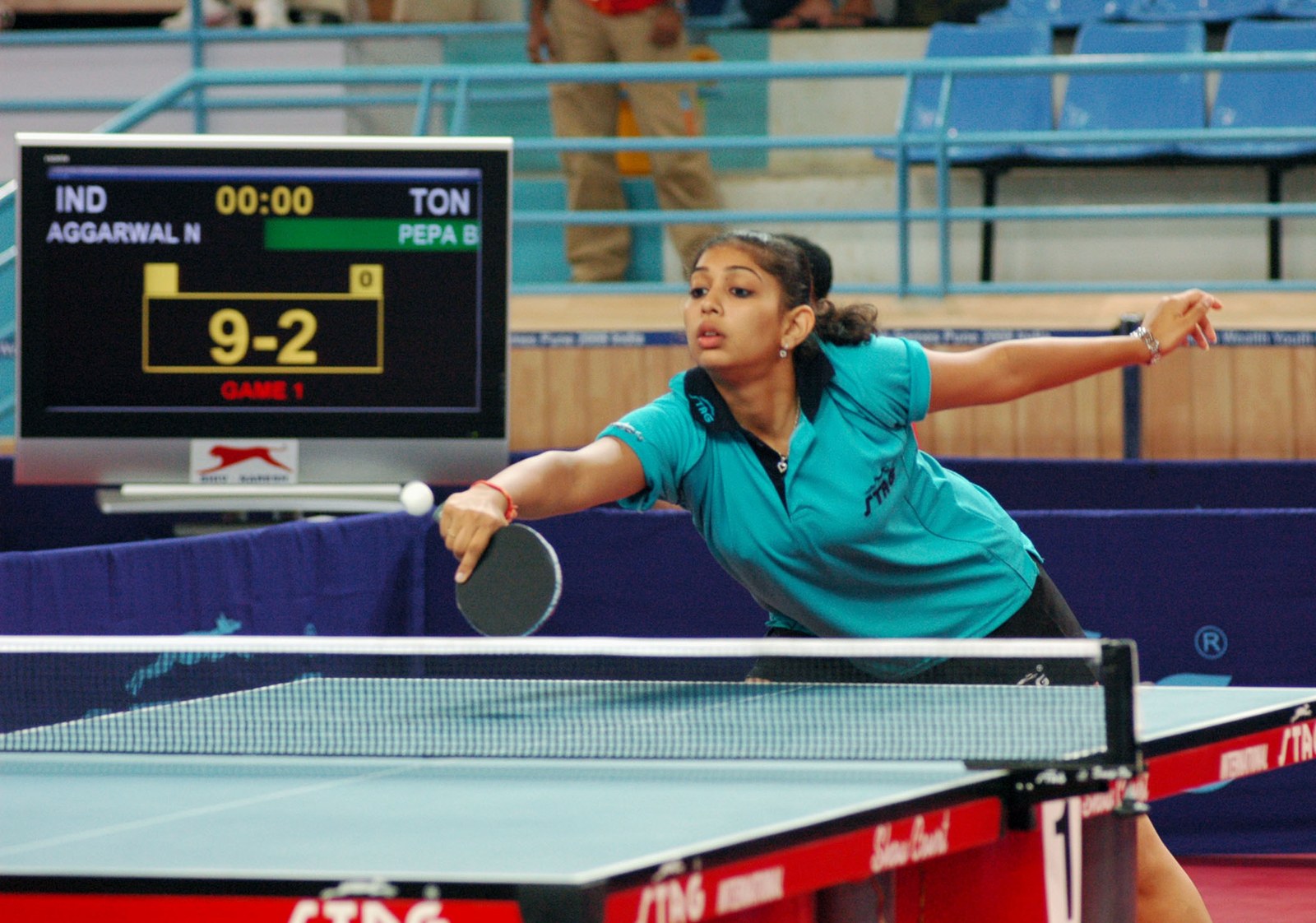
Neha Aggarwal retired from table tennis in 2015. She had represented India for thirteen years, from 2001 to 2014. She had competed at the 2008 Beijing Olympics, the only Indian woman in table tennis at those Games.
Then she left India again.
She moved to New York to pursue a Master of Science in Sports Management at Columbia University. She was in her early thirties. She was going back to being a student after a decade and a half as a professional athlete.
She came back to India in early 2017. She joined Olympic Gold Quest, the non-profit organisation that funds and supports India’s elite Olympic athletes. She is currently its Chief Partnerships Officer, based in Hyderabad.
This is the complete arc: Olympics, retirement, Columbia, India. Most conversations about Indian athletes going abroad stop somewhere in the middle of this arc and imagine a different ending.
The Question She Had Been Carrying
At some point during her athletic career, Neha Aggarwal had been asking herself a version of the same question that anyone who has watched Indian sport from the inside eventually asks: why is India not a bigger sporting nation? The country has the population, the hunger to compete and the athletes capable of performing at the highest levels. The results at the Olympic level have been historically below what those inputs would suggest.
She had a specific answer to that question. In interviews after her return, she was direct about it: the gap is not primarily in the athletes. It is in the professionals around the athletes. The administrators, the partnership managers, the people who build the institutional infrastructure that allows elite athletes to focus on their sport. India has not produced enough of these professionals at the level the sport requires.
This was not an abstract observation for her. She had experienced it from the athlete’s side: the decisions that affect an athlete’s career, made by people who do not have the professional formation to make them well. She wanted to work on the other side of that equation. And she understood that getting the formation to do that work properly required going somewhere that had built it.
What Columbia Was and Was Not
Columbia University’s MS in Sports Management programme is not a programme you go to because you want to learn what sport feels like from the inside. Neha Aggarwal already knew what sport felt like from the inside. She had been doing it for thirteen years.
What the programme offered was the other side: the business of sport, the institutional structures, the partnership management, the administrative systems that professional sports organisations require to function well. It was a deliberate gap she was filling.
She finished the programme with a GPA of 3.9.
The academic achievement matters not because it is the point but because it documents what she had been saying about herself all along: that she was not going to New York to experience something, she was going to learn something specific that she had decided India’s sports system needed and that she was in a position to provide.
The First Two Months
The transition from professional athlete to graduate student at Columbia University was not smooth. She described it as very tough. The specific difficulty was the shift in what was being asked of her: “It was about the sudden transition from an athlete to a student. Using a different skill set altogether.”
Thirteen years as a competitive table tennis player builds a very specific set of capacities: sustained physical preparation, performance under pressure, competition experience, the psychological endurance that comes from losing and returning. None of those capacities directly translate into the skills required for graduate coursework in business and management.
She had to develop the academic skill set while the athletic one, which had defined her identity for over a decade, was no longer the relevant measure. This is a specific kind of difficulty that athletes who go to university after competitive careers often underestimate: the disorientation of being a beginner again after years of being an expert.
She got through the first two months. She finished the programme. She got 3.9.
The difficulty she described is not an argument against going. It is an accurate description of what going actually costs, which is useful for any athlete or family considering the same transition.
The Return
In early 2017, Neha Aggarwal returned to India. The return was intentional. She had gone to Columbia specifically in order to come back: to bring a specific formation back into the Indian sports system rather than building a career in the sports industry abroad.
She had said before graduating that she saw herself “better inclined towards my long-term goal of bringing positive change to the Indian sports system.” This was not the language of someone who was undecided. She had made the decision before she enrolled.
The return took her to Hyderabad and to Olympic Gold Quest.
What She Built at OGQ
Neha Aggarwal: India to Columbia to India
The US degree opened the OGQ door. The OGQ role would not have been available without it.
Olympic Gold Quest is a non-profit founded in 2001 by Prakash Padukone and Viren Rasquinha to provide funding, support and professional infrastructure to India’s elite Olympic athletes. It has supported athletes across multiple sports at multiple Olympic cycles.
Neha Aggarwal joined as Chief Partnerships Officer. Her role involves building and managing the institutional relationships that allow OGQ to fund its programmes. She also manages OGQ’s Paralympics programme.
This is the specific kind of role that requires the formation she went to Columbia to acquire. Partnership management at a sports organisation at this level requires understanding both the sports world and the business and institutional world simultaneously. An athlete who went to a leading sports management programme and returned with the intent to apply that formation in India was, by construction, well positioned for it.
The career she has built is not a post-sport consolation. It is a continuation of the work she was doing as an athlete, applied to a larger system: she was, as an athlete, trying to perform as well as the system allowed. She is now, as an administrator, trying to improve what the system allows.
What This Journey Is For
Indian parents who are uncertain about their children going abroad for education frequently raise a version of the same fear: what if they go and do not come back?
This fear is real, is reasonable and is based on genuine evidence. Many Indians who study abroad build careers abroad. The talent that leaves does not always return. This is documented and it matters.
What Neha Aggarwal’s story documents is a different version of what going abroad can look like. She went with a specific intent. The intent was to acquire a formation that was not available at the level she needed in India, apply it to a problem she had identified in the Indian sports system and return to do the work.
She was not running away from India. She was investing in her capacity to be more useful in India.
The distinction between “going abroad to escape” and “going abroad to acquire something specific for a purpose you have already defined” is not always visible from the outside before someone leaves. It becomes visible in what they do when they return, or whether they return.
In Neha Aggarwal’s case, she came back in fourteen months. She has been working in Indian sport ever since.
For every parent who worries about losing a child to the world outside India: this is what coming back looks like. It looks like someone who left with a purpose they had already named and returned to pursue it. The question a parent can ask is not “will they come back?” in the abstract. The question is whether the child going abroad has a specific reason they have named for coming back.
What to Do This Week
If you are an Indian athlete considering further education abroad in a sport-related field: before you go, write down specifically what you intend to bring back. Not a general intention to help Indian sport. A specific problem, a specific role, a specific formation you are acquiring and a specific way you intend to apply it. Neha Aggarwal had done this before she enrolled. The specificity is what makes the return rational and the education purposeful.
If you are a parent concerned about your child going abroad for sport-related education: look up Olympic Gold Quest at olympicgoldquest.in and read about the work the organisation does and the kind of professionals it employs. This is the kind of institutional infrastructure in Indian sport that needs people with both athletic experience and formal sport management education. The career Neha Aggarwal built is one documented example of what returning from abroad to work in Indian sport looks like. Understanding what exists to return to is a useful part of the decision-making conversation.
If you are thinking about a transition from competitive athletics to a sport-adjacent professional role: the gap Neha Aggarwal identified, that India lacks sports professionals with the administrative and managerial formation to make good institutional decisions, has not been fully closed. The Sports Management programmes at institutions inside India (including JSS Institute of Sports Sciences, IISM Mumbai and others) have grown significantly. Research both the India-based and international options and assess what each produces in terms of the specific role you are trying to build toward. The foreign programme is one route. It is not the only route.